










































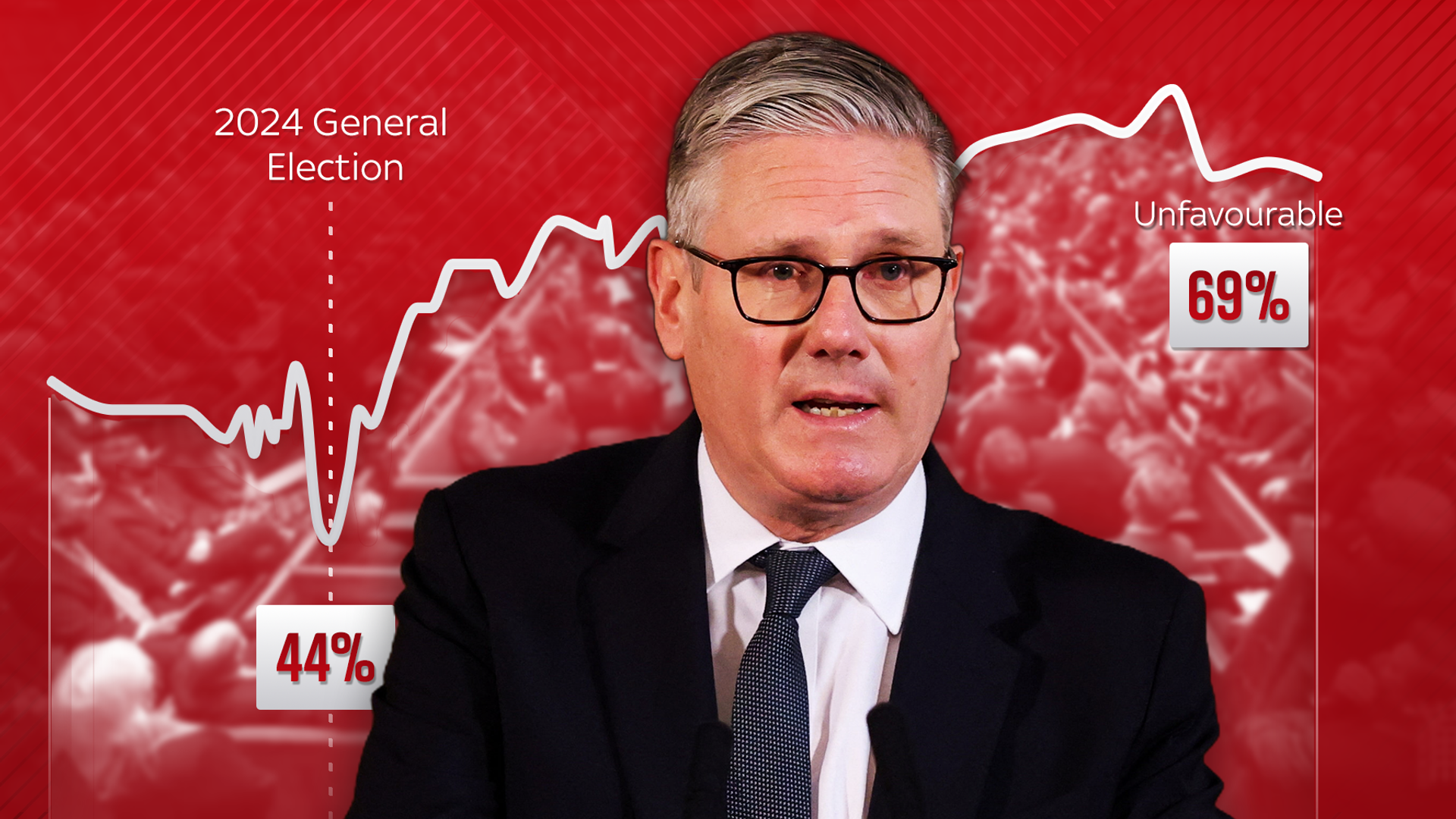
Labour’s disastrous local election results in May triggered a flurry of resignations from Sir Keir Starmer’s cabinet and calls to resign from 100 MPs – but his problems didn’t start there. The charts that tell us why Starmer resigned reveal a deeper underlying issue within the Labour Party.
One of the key factors in Starmer’s resignation was the party’s poor performance in the local elections. According to the charts, Labour lost control of key councils and saw a significant decrease in vote share compared to the previous election. This was a clear indication that the party was failing to connect with voters and was losing support in key areas.
Another factor that contributed to Starmer’s resignation was the ongoing internal divisions within the party. The charts show that there was a lack of unity within Labour, with different factions within the party pulling in different directions. This lack of cohesion made it difficult for Starmer to effectively lead the party and implement his vision for Labour.
The charts also highlight the challenges that Starmer faced in trying to rebuild the party after its devastating defeat in the 2019 general election. Labour’s loss of traditional heartlands to the Conservatives was a major blow, and the charts show that the party was struggling to win back these areas. This made it difficult for Starmer to build a broad coalition of support and win over voters in key battlegrounds.
Overall, the charts that tell us why Starmer resigned paint a bleak picture of the state of the Labour Party under his leadership. They reveal a party that was deeply divided, struggling to connect with voters, and facing significant challenges in rebuilding its support base. While Starmer’s resignation may have been triggered by the local election results, the charts show that his problems ran much deeper than that.